
TODAY’S WORD
切る
kiru
2 beats: ki-ru
包丁で切る = cut with a knife 電話を切る = hang up 期限が切れる = expire
“to cut” — a knife, a phone call, a date
Your friend has a new Japanese kitchen knife. It slides through a tomato with no pressure at all, and she grins: “よく切れる!” (Yoku kireru! — It cuts so well!)
Then her phone rings. Thirty seconds later: “ごめん、電話切ったよ。” (Gomen, denwa kitta yo. — Sorry, I’ve hung up.) She opens the fridge, picks up the milk, and frowns: “あ、期限が切れてる。” (A, kigen ga kireteru. — Oh, it’s past its date.) Three minutes, one kitchen, one verb: 切る (kiru) and its partner 切れる (kireru).
Use 切る and 切れる to talk about a knife, a phone call and a date — and conjugate 切る without the classic mistake.
Read & Say | 切る
The kanji 切 is read ki here. 切る has 2 beats; 切れる has 3 beats. In Japanese, each beat takes the same length of time.
切る (kiru)
切れる (kireru)
- る・れ (ru, re): the Japanese “r” is a light tap of the tongue — close to the “tt” in American “better.”
- Watch out: 着る (kiru, to wear) sounds almost the same. In standard Tokyo speech, 切る starts high and drops (KI-ru), while 着る starts low and rises (ki-RU). In real life, the rest of the sentence usually tells you which one it is.
What did you cut today?
Think first: Think of today. Did you cut bread, an onion, a piece of tape? Did you end a phone call? Is anything in your fridge past its date? In your own language, do you use the same verb for all three?
How 切る and 切れる work
1. Someone cuts it / it cuts. 切る is what a person does: the thing takes を (o), and the tool takes で (de). 切れる puts the thing first, with が (ga). It can mean “cuts well” (about a knife) or “runs out, ends” (about time, power, a line).
[person]が [tool]で [thing]を 切る
[person] ga [tool] de [thing] o kiru
[person] cuts [thing] with [tool]
[thing]が 切れる
[thing] ga kireru
[thing] cuts well / runs out / ends
2. The classic mistake. 切る ends in -iru, so it looks like 着る (to wear) and 見る (to see). But it conjugates the other way — it is a u-verb (godan): its る belongs to the stem and changes, as in 切って and 切らない.
| Form | 切る (to cut) | 着る (to wear) |
|---|---|---|
| polite | 切ります kirimasu | 着ます kimasu |
| て-form | 切って kitte | 着て kite |
| past | 切った kitta | 着た kita |
| negative | 切らない kiranai | 着ない kinai |
So “Please cut it” is 切ってください (kitte kudasai) — with a small っ. Without it, 着てください (kite kudasai) means “Please wear it.”
Everyday 切る
| Word | Meaning |
|---|---|
| 包丁で切る hōchō de kiru | to cut with a kitchen knife |
| 切れ味 kireaji | sharpness — literally “the taste of the cut”: how a blade feels as it cuts |
| 電話を切る denwa o kiru | to hang up the phone — Japanese “cuts” the call |
| 期限が切れる kigen ga kireru | to expire, to pass the deadline or date |
| 電池が切れる denchi ga kireru | the battery runs out |
The common thread is separating and ending: the knife separates the tomato, hanging up ends the call, and when a date or a battery 切れる, it has run to its end. That is how one verb can sit on the cutting board and on the milk carton.
切る in the kitchen
Two friends cooking dinner. A is trying B’s new knife.
Aこの包丁、よく切れるね!
Kono hōchō, yoku kireru ne!
This knife cuts really well!
Bでしょう? 切れ味がちがうよ。トマト、切って。
Deshō? Kireaji ga chigau yo. Tomato, kitte.
Right? The sharpness is something else. Cut the tomatoes, would you?
Aいいよ。あれ、この牛乳、期限が切れてる。
Ii yo. Are, kono gyūnyū, kigen ga kireteru.
Sure. Huh — this milk is past its date.
Bえっ、ほんと? じゃあ、買いに行こう。
E, honto? Jā, kai ni ikō.
Really? Then let’s go and buy some.
A uses 切れる twice — once for the knife (it cuts well), once for the milk (its date has run out). B uses 切って, the て-form, to ask for help.
Quiz | 切る
Q1. “Please cut the bread.” Which is correct?
Answer
b) 切って — 切る is a u-verb, so its て-form has a small っ. Kite is the て-form of 着る, to wear.
Q2. “This knife cuts well.” Which verb?
この包丁はよく( )。
Answer
b) 切れる — the knife is the subject, and the sentence describes what it can do.
Q3. You are on the phone and want to end the call. What do you do?
電話を( )。
Answer
a) 電話を切る — to hang up. Japanese “cuts” the call.
Q4. A sign on a coupon says 期限が切れています (kigen ga kirete imasu). What does it mean?
Answer
“This has expired.” The time it was valid for has run out — you can’t use it any more.
切る and 斬る — the sword and the knife
FROM HIRAGANA TIMES
Today’s word also lives in an article about blades. The December 2026 issue of Hiragana Times, a bilingual magazine published in Japan since 1986, carries a Japan Style feature titled 刀と包丁 (Katana to hōchō) — “The Sword and the Knife — Distant Memories Held in the Blade.” It asks why Japanese swords and kitchen knives are so beautiful, and finds that both began as sacred tools.
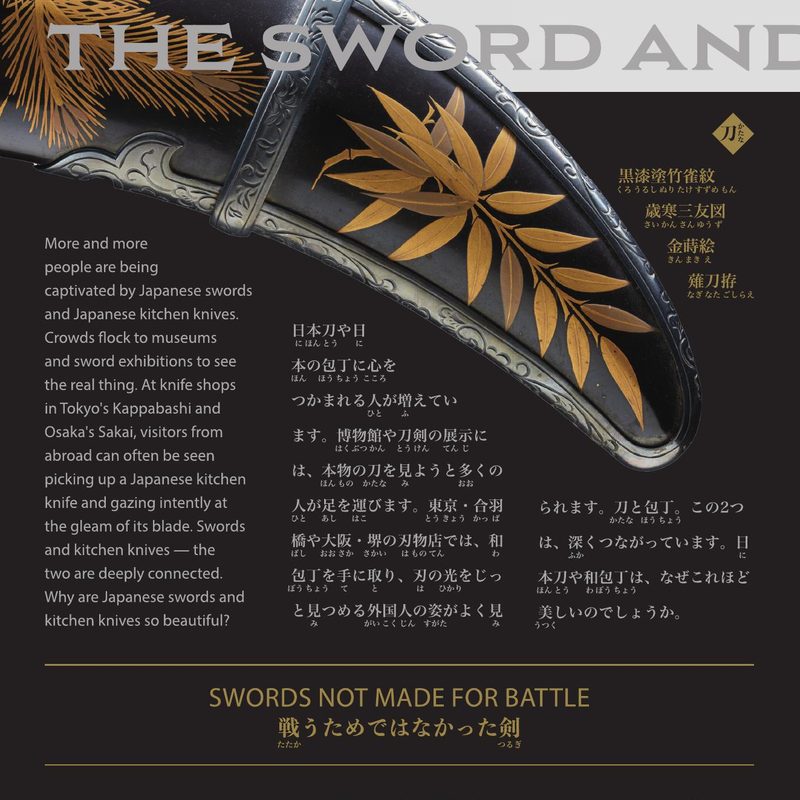
Hear the word “sword,” and most people picture a samurai’s weapon; hear “kitchen knife,” and they picture a chef’s tool. But at their origin, they were neither tools for cutting down people nor tools for cutting food. They were sacred instruments that connected people with the divine — that is, with life itself.
「刀」と聞けば侍の武器を、「包丁」と聞けば板前の調理道具を、多くの人は思い浮かべます。けれど、そのはじまりにあったのは、人を斬る道具でも、食べ物を切る道具でもありません。神、すなわち命と人とをつなぐための、神聖な道具だったのです。
“Katana” to kikeba samurai no buki o, “hōchō” to kikeba itamae no chōri dōgu o, ōku no hito wa omoiukabemasu. Keredo, sono hajimari ni atta no wa, hito o kiru dōgu demo, tabemono o kiru dōgu demo arimasen. Kami, sunawachi inochi to hito to o tsunagu tame no, shinsei na dōgu datta no desu.
Look at the two verbs. Both are read kiru. 人を斬る uses 斬, the kanji for cutting with a sword — the English says “cutting down people.” 食べ物を切る uses today’s everyday 切 — “cutting food.” Same sound, two kanji: the sword and the knife, side by side in one sentence.
Your Voice | What do you cut — and what has run out?
[tool]で[thing]を切ります。 [thing]が切れました。
[tool] de [thing] o kirimasu. [thing] ga kiremashita.
I cut [thing] with [tool]. [thing] ran out / expired.
- Think of one thing you cut every day, and one thing that ran out or expired recently.
- Put them into the patterns above — を and で with 切る, が with 切れる.
- Read it aloud, then say it without looking.
毎朝、包丁でパンを切ります。きのう、スマホの電池が切れました。
Maiasa, hōchō de pan o kirimasu. Kinō, sumaho no denchi ga kiremashita.
Every morning, I cut bread with a knife. Yesterday, my phone battery ran out.
Write your answer in the comments below — a We coach will reply.
Speak Your Language | Make 切る yours
Practice is not the goal. The goal is to make 切る your own word — and say what you really feel, in Japanese.
A new language gives you a new way to see the world, and a new self. Other lessons stop at “切る = to cut.” We follow the word through one real kitchen — the knife that よく切れる, the call you 切る, the milk whose date has 切れた — until you can say all three without stopping to translate, and without saying “wear” when you mean “cut.” That’s We.
Speak Your Language.
Read the full article in Hiragana Times →
Learn Japanese through real Japan with We Languages — book your free counseling →