
TODAY’S WORD
いくらですか
ikura desu ka
6 beats: i-ku-ra-de-su-ka
いくら ikura = how much + ですか desu ka = polite question
“How much is it?”
You are in a small shop in Tokyo. A lucky-cat keychain catches your eye — a perfect gift for a friend back home. But there is no price tag.
What do you say? すみません、これはいくらですか? (Sumimasen, kore wa ikura desu ka?) — “Excuse me, how much is this?” Then comes the harder part: understanding the answer.
Ask a price with いくらですか, and understand the answer.
Read & Say | いくらですか
いくらですか has 6 beats. In Japanese, each beat takes the same length of time.
- No strong syllable: English speakers tend to say “i-KU-ra.” Keep all beats even in length — no stress on any one.
- ら (ra): a light tap of the tongue — close to the quick “tt” in American English “butter.”
- です (desu): the final “u” is almost silent, so you hear “dess.” Let your voice rise a little on か.
What would you buy?
Think first: When you travel, do you bring back souvenirs for family or friends? What would you look for in Japan?
Three ways to use いくらですか
1. Point and ask. これ (kore) means “this,” for something close to you.
すみません、これはいくらですか?
Sumimasen, kore wa ikura desu ka?
Excuse me, how much is this?
2. Ask for the total. 全部で (zenbu de) means “all together.”
全部でいくらですか?
Zenbu de ikura desu ka?
How much is it all together?
3. Understand the answer. Prices come back as 〜円です (… en desu), “It’s … yen.”
1,200円です。税込です。
Sen nihyaku en desu. Zeikomi desu.
It’s 1,200 yen. That’s tax included.
Reading prices
A Japanese price is read in blocks, from big to small: 千 (sen, thousand), 百 (hyaku, hundred), 十 (jū, ten), then 円 (en). Three details to watch:
- 1,000 is just せん (sen) — no “one” in front. 1,200 = せん・にひゃく (sen nihyaku).
- Some sounds change: 300 is さんびゃく (sanbyaku), 600 ろっぴゃく (roppyaku), 800 はっぴゃく (happyaku); 3,000 is さんぜん (sanzen).
- For 4, 7 and 9, say よん (yon), なな (nana) and きゅう (kyū): 770 = ななひゃく・ななじゅう (nanahyaku nanajū).
| Price | Say it |
|---|---|
| 1,200円 | せんにひゃくえん sen nihyaku en |
| 2,400円 | にせんよんひゃくえん nisen yonhyaku en |
| 3,300円 | さんぜんさんびゃくえん sanzen sanbyaku en |
On price tags you will often see 税込 (zeikomi), “tax included.”
いくらですか in a shop
Aすみません、この招き猫はいくらですか?
Sumimasen, kono maneki neko wa ikura desu ka?
Excuse me, how much is this lucky cat?
B1,200円です。
Sen nihyaku en desu.
It’s 1,200 yen.
Aじゃあ、2つください。
Jā, futatsu kudasai.
I’ll take two, then.
B2つで2,400円です。
Futatsu de nisen yonhyaku en desu.
That’s 2,400 yen for two.
Quiz | いくらですか
Q1. You want to know a price. Which word fills the blank? これは( )ですか?
Answer
b) これはいくらですか? — どこ means “where,” だれ means “who.”
Q2. How do you read 3,300円?
Answer
a) Both 3,000 (さんぜん) and 300 (さんびゃく) change their sound.
Q3. What does 税込 (zeikomi) on a price tag mean?
Answer
Tax included.
Four real souvenirs, four prices
FROM HIRAGANA TIMES
Ready to read real price tags? The November 2026 issue of Hiragana Times, a bilingual magazine published in Japan since 1986, introduces four おみやげ (omiyage, souvenirs) in its “Japan Products” corner — each with its price, tax included.
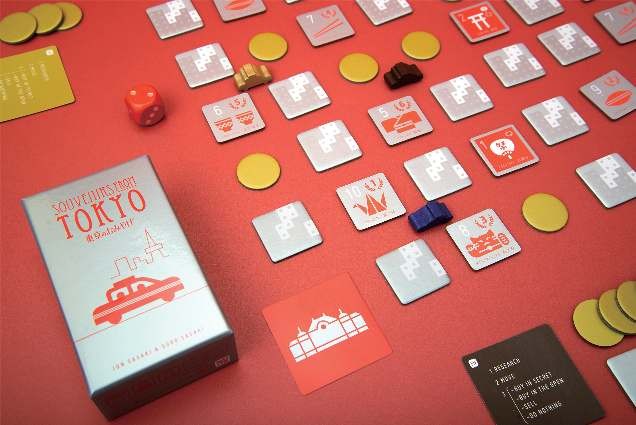
新幹線の発車時刻が迫るなか、東京でおみやげを買い集めて駅へ戻ることを目指す、変則すごろくゲーム。
Shinkansen no hassha jikoku ga semaru naka, Tōkyō de omiyage o kaiatsumete eki e modoru koto o mezasu, hensoku sugoroku gēmu.
With the Shinkansen about to depart, players race around Tokyo buying souvenirs and try to get back to the station in time — a sugoroku board game with a twist.
| Souvenir | Price (tax included) |
|---|---|
| 東京のおみやげ Souvenirs from Tokyo (board game) | 2,970円 nisen kyūhyaku nanajū en |
| NIPPON 枡 NIPPON Masu (wooden box) | 1,650円 sen roppyaku gojū en |
| 壁掛寿司カレンダー Wall-Hanging Sushi Calendar | 2,420円 nisen yonhyaku nijū en |
| 河鍋暁斎の絵はがき Kawanabe Kyōsai postcards (6 designs) | 770円 nanahyaku nanajū en |
Your Voice | Which one would you buy?
すみません、これはいくらですか?
Sumimasen, kore wa ikura desu ka?
Excuse me, how much is this?
- Choose one of the four souvenirs above.
- Ask its price, then say the answer: 〜円です。
- Read it aloud, then say it without looking.
この絵はがき、いくらですか? ― 770円です。 ― じゃあ、2つください。
Kono ehagaki, ikura desu ka? — Nanahyaku nanajū en desu. — Jā, futatsu kudasai.
How much are these postcards? — 770 yen a set. — Two sets, then, please.
Write your answer in the comments below — a We coach will reply.
Speak Your Language | Make いくらですか yours
Practice is not the goal. The goal is to make いくらですか your own word — and use it in a real shop in Japan.
A new language gives you a new way to see the world, and a new self. Other lessons stop at the set phrase. We practise with real products and real prices. That’s We.
Speak Your Language.
Read the full article in Hiragana Times →
Learn Japanese through real Japan with We Languages — free consultation →