

TODAY’S WORD | from the Hiragana Times Cover Story
こわい
ko · wa · i
Say it in 3 beats: ko-wa-i
scary = こわいscared = こわい
One Japanese word for both “scary” and “scared”
A spooky house is scary. And when you walk inside, you are scared. English needs two words. Japanese needs only one: こわい (kowai).
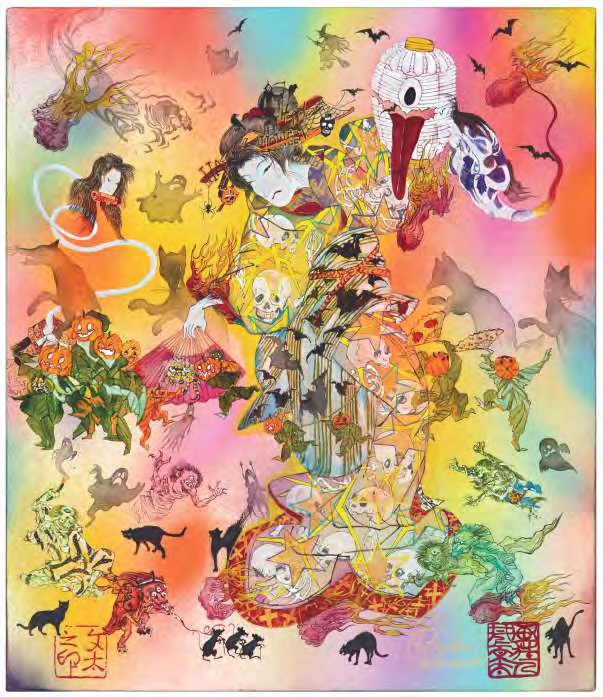
The November cover story of Hiragana Times shows a Japanese night parade of yokai meeting Halloween. Start with こわい, and you’ll be able to talk about yokai, Halloween and the things you fear — in Japanese.
Read and say こわい, use it for both “scary” and “scared,” and answer one question in Japanese: “What are you scared of?” Allow about 15–20 minutes.
How to read the Japanese on this page: small hiragana under each kanji show how to read it. Under each Japanese line you’ll find romaji (gray) and English.
Read & Say | こわい, sound by sound
こわい has 3 beats. Each beat takes the same length of time. Say all three clearly — don’t swallow the last い (i).
- Written in hiragana: you will usually see こわい in hiragana. In kanji it is 怖い, but hiragana is fine and very common.
- An い-adjective: it ends in い (i), so it changes its ending like other い-adjectives (see the patterns below).
- Don’t mix it up with かわいい (kawaii, cute) — 4 beats: ka-wa-i-i.
What looks kowai?
Think first: Look at the cover. Find one thing that looks scary and one thing that looks fun. Point and say こわい! (kowai!) at the scary one.
Read & Listen | kowai in Hiragana Times
The cover by Bunta Inoue, the artist mad about painting (画狂人, gakyōjin), shows yokai and Halloween together. The article is about a very Japanese habit: turning scary things into play.
“Turning fear into laughter, they even take a foreign festival into their circle.”
Hiragana Times — The Country That Turns Even Fear into Play
Here is how to say the key idea in simple Japanese (written by We Languages for learning):
こわさを笑いに変える。
Kowasa o warai ni kaeru.
Turn fear into laughter.
Tip: change the last い of an い-adjective to さ and you get a noun: こわい → こわさ (scary → fear).
Listening point: The audio has English and Japanese. Listen for the sound こわ (kowa).
Read the full article in Hiragana Times →
The example sentences, conversation and quiz on this page were written by We Languages for learning. They are not quotes from the article.
Using こわい | 4 patterns
1. It’s scary — [thing]は こわい
この絵は、こわい。
Kono e wa, kowai.
This picture is scary.
2. I’m scared! — こわい!
Japanese often drops “I.” When you feel scared, just say こわい! The same word, now meaning “scared.”
こわい!
Kowai!
I’m scared! / That’s scary!
3. I’m scared of … — [thing]が こわい
The thing you fear takes the particle が (ga), not を (o).
おばけが こわい。
Obake ga kowai.
I’m scared of ghosts.
弟は、暗いところが こわい。
Otōto wa, kurai tokoro ga kowai.
My little brother is scared of dark places.
4. Looks scary / not scary — こわそう・こわくない
| Form | How to make it | Meaning |
|---|---|---|
| こわくない kowakunai | drop い, add くない | not scary / not scared |
| こわそう kowasō | drop い, add そう | looks scary |
| こわかった kowakatta | drop い, add かった | was scary / was scared |
こわそうだけど、こわくない。
Kowasō da kedo, kowakunai.
It looks scary, but it isn’t.
Key Words | Words for a spooky night
| Japanese | Romaji | English |
|---|---|---|
| こわい | kowai | scary; scared |
| こわさ | kowasa | fear, scariness |
| おばけ | obake | ghost, spook |
| 妖怪 | yōkai | yokai, Japanese supernatural creature |
| 百鬼夜行 | hyakki yakō | night parade of a hundred yokai |
| ハロウィン | harowin | Halloween |
| 笑い | warai | laughter |
| かわいい | kawaii | cute |
Culture | Yokai and the night parade
Yokai are not just “monsters.” Some are scary, some are funny, and some are a little cute. On the cover they march at night in a 百鬼夜行 (hyakki yakō) — a parade of a hundred yokai.
妖怪は、こわいけど、おもしろい。
Yōkai wa, kowai kedo, omoshiroi.
Yokai are scary, but fun.
百鬼夜行は、妖怪の夜のパレードです。
Hyakki yakō wa, yōkai no yoru no parēdo desu.
Hyakki yako is a night parade of yokai.
ハロウィンも、日本では楽しいお祭りです。
Harowin mo, Nihon de wa tanoshii omatsuri desu.
In Japan, Halloween is a fun festival too.
Mini Dialogue | Use kowai at a Halloween party
Two friends see a yokai costume. This is casual Japanese between friends.
A:あれ、なに?
Are, nani?
What’s that?
B:妖怪だよ。
Yōkai da yo.
It’s a yokai.
A:こわい!
Kowai!
I’m scared!
B:こわそうだけど、こわくないよ。
Kowasō da kedo, kowakunai yo.
It looks scary, but it’s not.
A:ほんとだ。ちょっと、かわいい。
Honto da. Chotto, kawaii.
You’re right. It’s kind of cute.
- 〜だよ (da yo) = a friendly “it’s …!”
- 〜けど (kedo) = “but.” こわそうだけど = “it looks scary, but …”
- Notice how the same こわい means “I’m scared!” here, with no “I.”
Quiz | kowai check
Q1. How many beats does こわい have?
a) 2 (ko-wai) b) 3 (ko-wa-i) c) 4 (ko-wa-i-i)
Answer
b) 3 beats: こ・わ・い. 4 beats (ka-wa-i-i) is かわいい, “cute.”
Q2. こわい can mean …
a) only “scary” b) only “scared” c) both “scary” and “scared”
Answer
c) One word covers both. English splits it into scary and scared.
Q3. “I’m scared of ghosts.” Which particle goes in the blank?
Answer
a) が. The thing you fear takes が: おばけがこわい.
Q4. “It’s not scary.” Which is correct?
Answer
a) Drop the last い and add くない: こわい → こわくない.
Your Voice | What are you scared of?
何が こわいですか。
Nani ga kowai desu ka.
What are you scared of?
- Say what you fear: [thing]が こわいです。 (… ga kowai desu.)
- Say something that looks scary but isn’t: [thing]は、こわそうだけど、こわくないです。 (… wa, kowasō da kedo, kowakunai desu.)
- Read your answer aloud, then say it again without looking.
暗いところが こわいです。でも、妖怪は、こわそうだけど、こわくないです。
Kurai tokoro ga kowai desu. Demo, yōkai wa, kowasō da kedo, kowakunai desu.
I’m scared of dark places. But yokai only look scary — they’re not.
Reflect: Can you say こわい in 3 even beats — and use it for both “scary” and “scared”?
Write your answer in the comments below — a We coach will reply.
Speak Your Language | Make こわい yours
Practice is not the goal. The goal is to make こわい your own word — and say what you really feel, in Japanese.
A new language gives you a new way to see the world, and a new self. Hiragana Times brings you real Japan every month, with English and Japanese side by side.
Speak Your Language.
Read the full article in Hiragana Times →
Learn Japanese through real Japan with We Languages — free consultation →